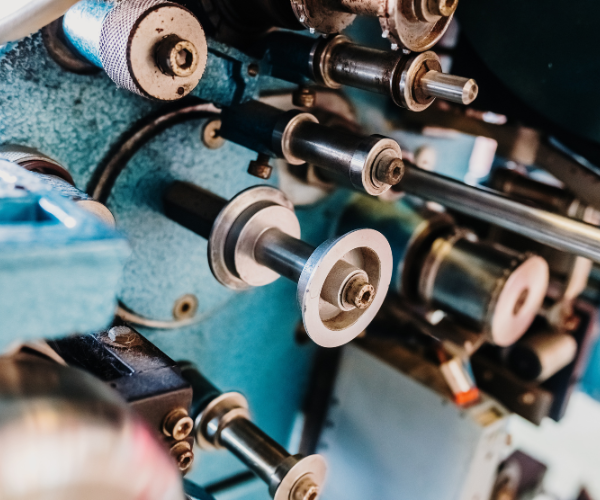
Today good quality with clean threads is necessary for the industries. From automotive fasteners to construction components, threads directly affect the product performance that's why manufacturers focus on clean and accurate threads, and where the thread rolling machine is working is very important. These threads meet the demanding quality standards and, as a result, provide a stronger and more reliable performance.
Why Do Clean Threads Matter in Manufacturing?
The clean thread ensures the proper fit and improves load-bearing capacity. Threads that are poorly formed can lead to vibrations and task failure. This is why manufacturers today are focusing on product quality, ensuring durability.
What Makes Thread Rolling Different from Cutting?
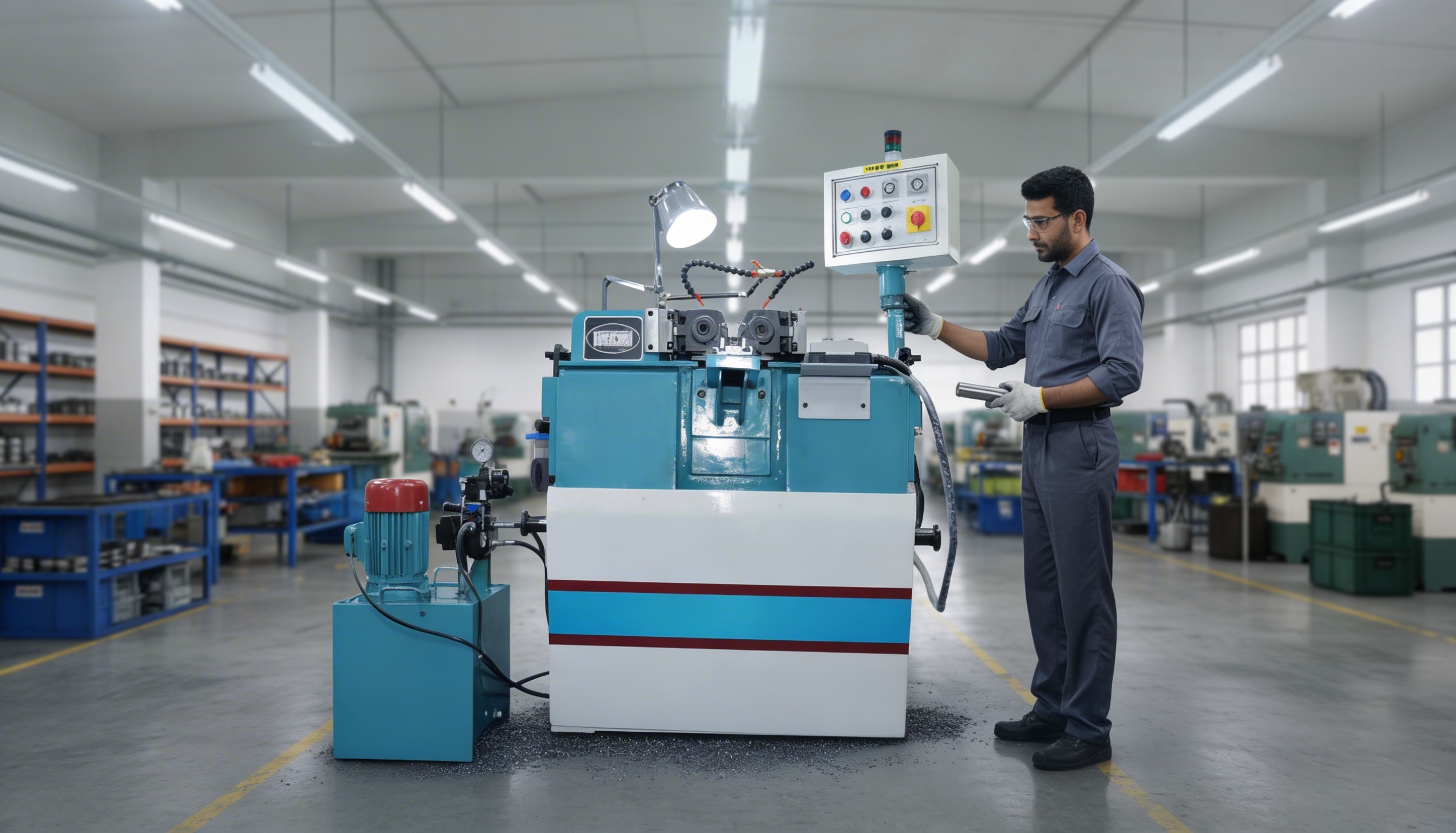
Thread rolling is a process of cold-forming in which hardened dies press thread into a rotating blank. No material is removed in this process, unlike cutting. From this method, you can increase the strength and enhance the surface finish. Thread rolling machines are small in size, and this setup offers good quality benefits without heavy infrastructure.
Choosing the Right Machine for Your Scale of Work
Small and mid-size workshops require compact solutions that are easy to maintain or operate. Thread rolling machine manufacturers today are keen on offering the latest designs of rolling machines.
Did you know?
Thread rolling actually improves metal strength instead of weakening it—most machines do the opposite by removing material.
Cost Considerations Before Investing
When you are purchasing industrial equipment for your work, budget planning is very important. The thread rolling machine price depends on capacity, automation, and the build quality. Initially, it may look like a high investment, but in the long term, you are able to increase the profit from this.
Market Trends and Indian Manufacturing Perspective
Now Indian manufacturers are continuously expanding their businesses because the demand for quality is high, and that's why the result is that the thread rolling machine price in India is competitive due to local production, skilled labor, and growing technology.
Benefits of Using Thread Rolling Machines
Here are some practical advantages of Thread Rolling Machines.
- Stronger threads due to grain flow alignment
- Improved surface finish and dimensional accuracy
- Higher production speed compared to cutting
- Minimal material waste
- Longer tool life
The real value of the thread rolling machine price helps businesses and increases productivity.
Technical Specifications of Thread Rolling Machine
Here is the technical specification table of the thread rolling machine.
| Specification Category |
Details |
| Model & Capacity |
Max/Min Threading Diameter: 16–40 mm |
| Threading Length: Standard / Customizable |
| Rolling Force |
Maximum Rolling Force: 10–22 Tons |
| Performance |
Threading Speed: 40–62 RPM |
| Pitch Range: 0.75–4.0P / 40–6 TPI |
| Power Requirement |
Main Motor Power: 3.75–7.5 kW (5–10 HP) |
| Voltage: 415V, 3 Phase |
| Dimensions & Weight |
Machine Footprint (L × W × H): Standard Industry Size |
| Machine Weight: 400–2000 kg |
| Material Compatibility |
Suitable for MS (Mild Steel) and SS (Stainless Steel) |
| Automation Type |
Semi-Automatic or Fully Automatic |
| Key Features |
Hydraulic System
Cooling System
Safety Covers
Electrical Control Panel
Tool Kit
User-Friendly Operation |
From this specification, the output quality is consistent, the efficiency of the production is high, and the life of the machine is increased.
Conclusion
To achieve the clean output of the product, the thread rolling machine has become an important tool because the ability of this product is to increase the efficiency and quality while reducing the waste, and that's why this is a smart choice for industries and manufacturers. If your workspace is small, this will also fit perfectly for you and your workshop. The right investment with the right technology provides consistent output and long-term reliability. If you are ready to procure the thread rolling machine or related products, then HTMT is the best fit for you because of their focus on quality, innovation, and customer support with good reliability. With this manufacturer, they achieve efficiency in work with better quality and productivity in industrial machinery solutions. Visit now H.T.M.T Pvt. Ltd. Website.
FAQs
1: Why are thread rolling machines preferred for producing clean threads?
Ans: Thread rolling machines produce clean threads because they form threads by reshaping the metal instead of cutting it. This process maintains the natural grain structure of the material, resulting in smoother finishes and stronger threads. Since no chips or burrs are created, the final product requires minimal post-processing, making thread rolling ideal for high-quality and precision-based manufacturing.
2: How does thread rolling improve the strength of fasteners?
Ans: Thread rolling improves fastener strength by compressing and work-hardening the material during thread formation. This creates continuous grain flow along the thread profile, which increases resistance to fatigue, wear, and shear stress. Compared to cut threads, rolled threads perform better under repeated loads, making them highly reliable for automotive, construction, and heavy engineering applications.
3: What challenges do operators face when using thread rolling machines for the first time?
Ans: New operators often struggle with correct die alignment, pressure settings, and material selection. Incorrect setup can lead to uneven threads or premature die wear. However, with proper training and understanding of machine parameters, these challenges are quickly resolved. Most experienced operators agree that once mastered, thread rolling machines are easier to control than traditional cutting methods.
4: Are thread rolling machines suitable for small-scale manufacturing units?
Ans: Yes, thread rolling machines are highly suitable for small-scale manufacturing units. Compact and semi-automatic models are designed to deliver precision without requiring large floor space or complex infrastructure. These machines offer excellent productivity, low material waste, and long tool life, allowing small workshops to compete with larger manufacturers while maintaining consistent thread quality.
5: How does switching from thread cutting to thread rolling impact production efficiency?
Ans: Manufacturers who switch to thread rolling often notice a significant improvement in production speed and consistency. Since the process is faster and produces fewer defects, rejection rates drop noticeably. Operators also report reduced tool replacement costs and less downtime. Overall, thread rolling streamlines workflow and improves output quality, especially in high-volume production environments.
6: What factors should be considered before purchasing a thread rolling machine?
Ans: Before purchasing a thread rolling machine, consider production volume, material type, thread size range, and automation requirements. Machine build quality, die compatibility, and after-sales support are equally important. Evaluating long-term operational costs instead of only upfront pricing helps ensure better return on investment and reliable performance over the machine’s lifespan.