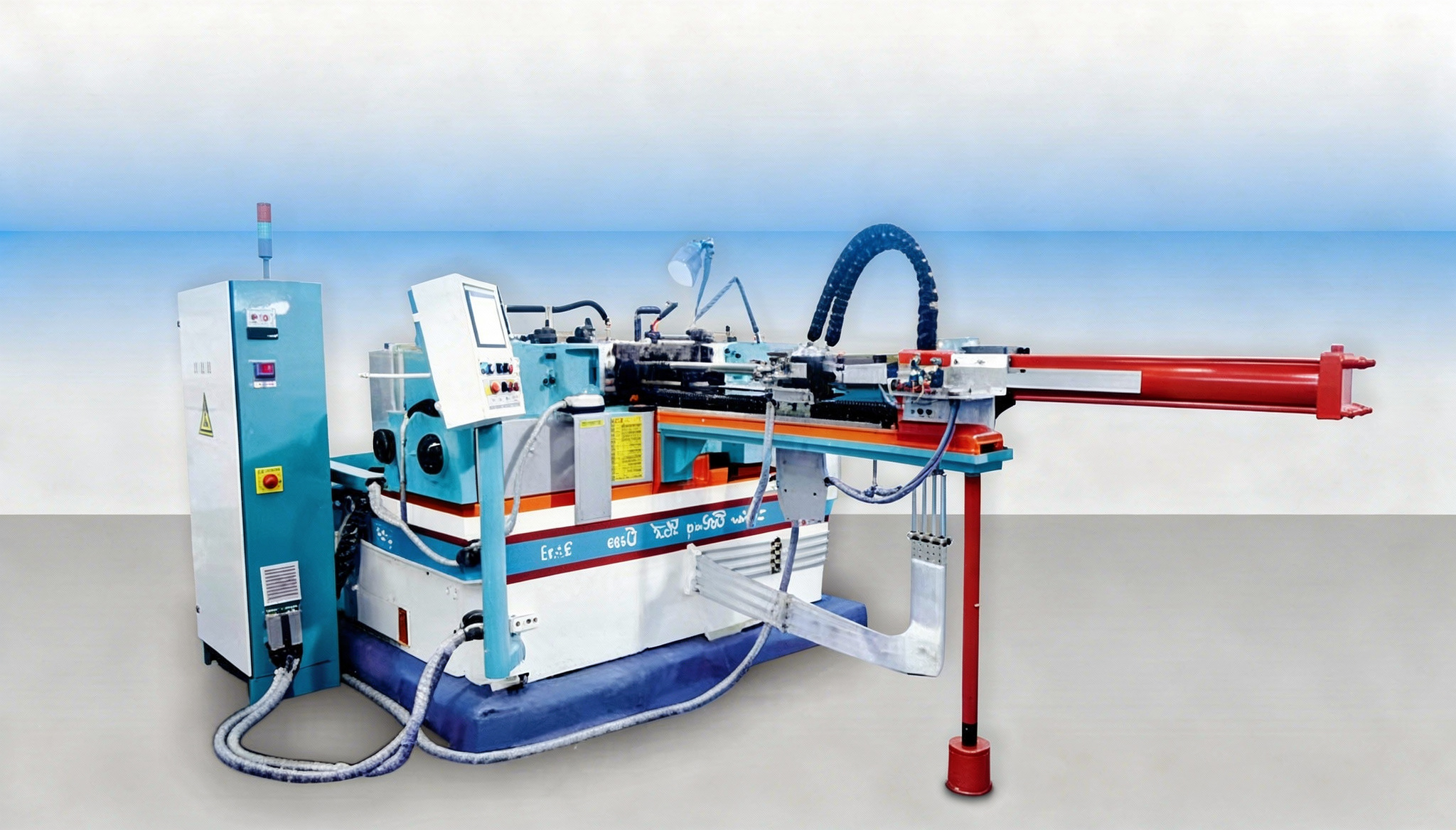
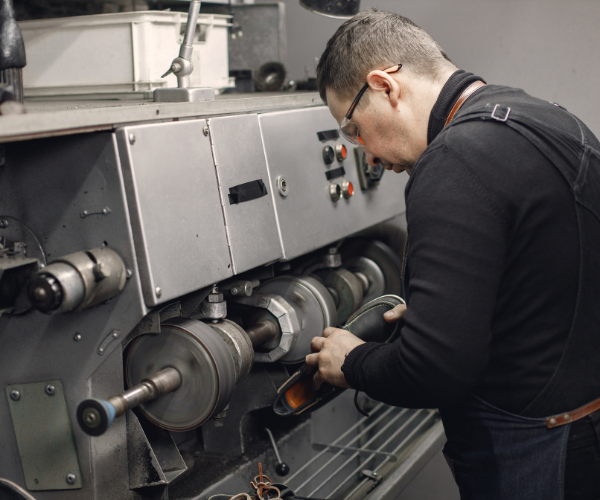
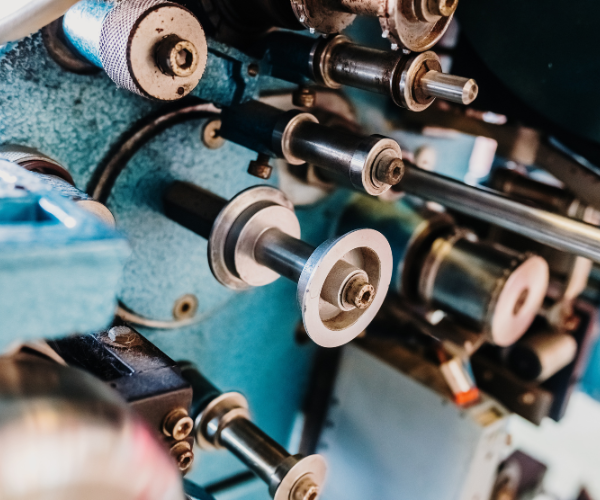
Today's manufacturers face intense pressure to produce a large quantity of parts faster and with good quality. There are 2 different widely discussed methods, rolling and hobbing, for forming versus cutting and rolling. Reshaping material under pressure, while hobbing removes material using a cutting tool for mass production. This is traditional but not the right fit as per the situation, and a rolling machine performs the best to produce the material with large volume.
Understanding the Rolling Process
Rolling is a cold-forming process in which rigid dies plastically deform the workpiece of threads, splines, or profiles. Because material flows rather than being cut, the final component gains higher strength and better surface integrity. When manufacturers analyze the rolling machine price, they always notice that the initial investment appears higher than traditional cutting machines. However, the ROI becomes clear through higher output rates, longer tool life, and lower scrap generation by the time rolling delivers important cost advantages in high-volume operations.
Key characteristics of rolling:
- No material wastage
- High repeatability
- Improved fatigue strength
- Excellent surface finish
Understanding the Hobbing Process
A part of the material gets removed with the help of the cutting tool.
This process works well for:
- Low to medium production volumes
- Prototyping and custom parts
- Complex geometries requiring flexibility
Hobbing is a material removal process that naturally includes chip formation, higher tool wear, and comparatively slower cycle times.
Key Differences: Rolling vs. Hobbing
Rolling Machines operate faster and require less post-processing. At a fundamental level, rolling strengthens the part, while hobbing shapes it by cutting. But hobbing often demands secondary finishing steps. Sheet metal rolling ensures consistency across thousands of components without introducing stress risers caused by cutting where uniform thickness, smooth surface, and structural strength are critical. This is the major advantage seen in the applications using a rolling machine for sheet metal.
Trivia:
Hobbing makes chips. Rolling makes profits. That’s why factories prefer one over the other for mass production.
Why Rolling Wins in Mass Production
It is due to the fact that rolling reduces downtime considerably. In mass production, efficiency is the most important factor. For the high-strength production of splines with superior load-bearing capacity, the Spline Rolling Machine allows manufacturers to do it. Automotive and transmission components is the important factor of longer service life, rolled spline maintain uninterrupted grain flow
Why industries prefer rolling:
- Faster cycle times
- Stronger components
- Lower cost per part at scale
- Ideal for automation and continuous production
Cost, Speed, and Tool Life Comparison
Rolling offers better economics over time, while a hobbing machine may appear cheaper initially. Also, rolling machine tool life is several times longer because there is no chip removal in cutting processes.
The Rack Rolling Machine stands out for its ability to produce racks at high speed with minimal operator interference in profile production. This makes it ideal for motion components and industrial machinery where consistency is very important.
Application-Based Decision Guide
The decision depends on volume, material, and functional requirements for your industry.
Here is the example of both use cases.
- Choose rolling for:
- Automotive fasteners
- Transmission shafts
- High-strength splines and threads
- Choose hobbing for:
- Prototypes
- Low-volume custom gears
- Complex profiles requiring frequent design changes
The Thread Rolling Machine has become the more efficient process due to its speed and reliability for critical load applications.
Fun Fact:
If hobbing is like carving a statue with a chisel—slow and dusty—rolling is like using a cookie cutter. Same shape, zero mess, and way faster. That’s why mass production loves rolling!
Rolling vs. Hobbing: Comparison Table
Here is the comparison table;e with this you can easily understand the difference between rolling and hobbing.
| Parameter |
Rolling |
Hobbing |
| Process Type |
Cold forming |
Cutting |
| Material Waste |
None |
High (chips) |
| Production Speed |
Very high |
Moderate |
| Tool Life |
Long |
Shorter |
| Part Strength |
High (grain flow intact) |
Standard |
| Best for Mass Production |
Yes |
Limited |
Conclusion
Rolling is not the alternate to hobbing; it is a very well-planned upgrade for the manufacturers on scalability, efficiency, and the long-term ROI. While hobbing remains useful or specialized for low-volume production, rolling clearly dominates when consistency, strength, and speed are the top priorities. For large production and advanced solutions, the rolling machine price becomes more effective, and their technologies, such as thread rolling machine, enable automation, and rolling continues with the standards.
If you are exploring advanced rolling solutions for your industrial manufacturing companies, like HTMT Pvt Ltd. Connect with us now.
“Built for volume, strength, and speed—rolling is the smarter choice for mass production.”
Frequently Asked Questions (FAQs)
1. What is the main difference between rolling and hobbing?
Rolling is a cold-forming process that reshapes metal under pressure, while hobbing is a cutting process that removes material. This makes rolling faster and more suitable for high-volume production. Hobbing is generally used for lower volumes or complex profiles.
2. Why is rolling preferred for mass production?
Rolling offers higher production speed, longer tool life, and minimal material waste. Since there are no chips or cutting forces, downtime and maintenance are reduced. This makes rolling more economical and efficient for large-scale manufacturing.
3. Does rolling produce stronger components than hobbing?
Yes. Rolled components retain continuous grain flow, which improves fatigue strength and load-bearing capacity. Cut components made through hobbing may have interrupted grain structure, which can reduce long-term durability.
4. Is hobbing still relevant in modern manufacturing?
Absolutely. Hobbing is ideal for prototyping, custom gears, and low-volume production where flexibility is required. While it may not match rolling in speed, it offers precision and design adaptability.
5. How do I choose between rolling and hobbing for my application?
The choice depends on production volume, part strength requirements, and cost goals. For high-volume, strength-critical components, rolling is the better option. For small batches or complex geometries, hobbing can be a practical choice.
Additional Resources:
You might also want to read these: